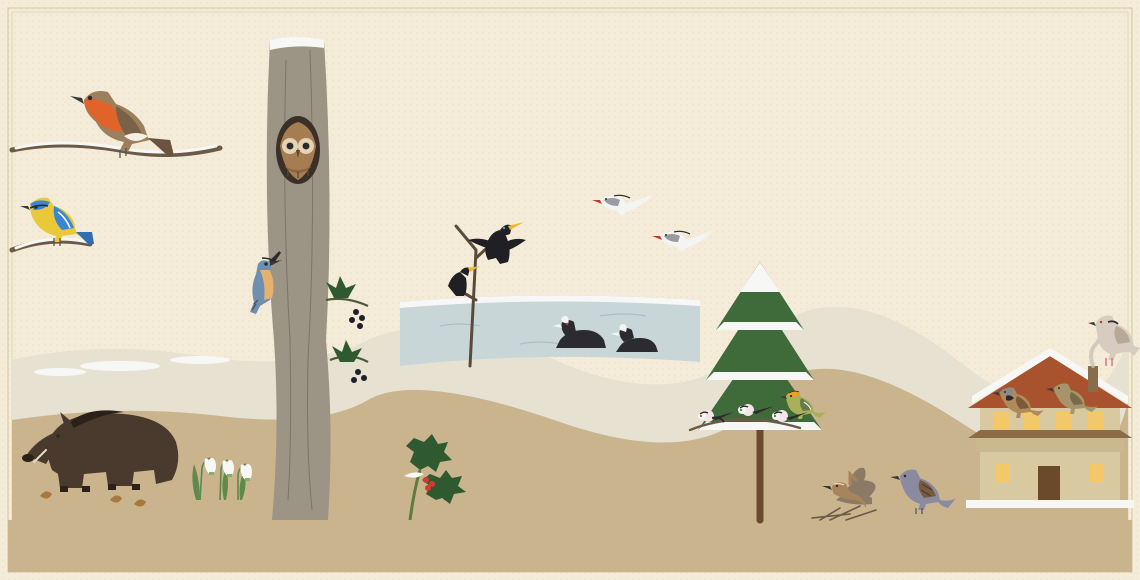
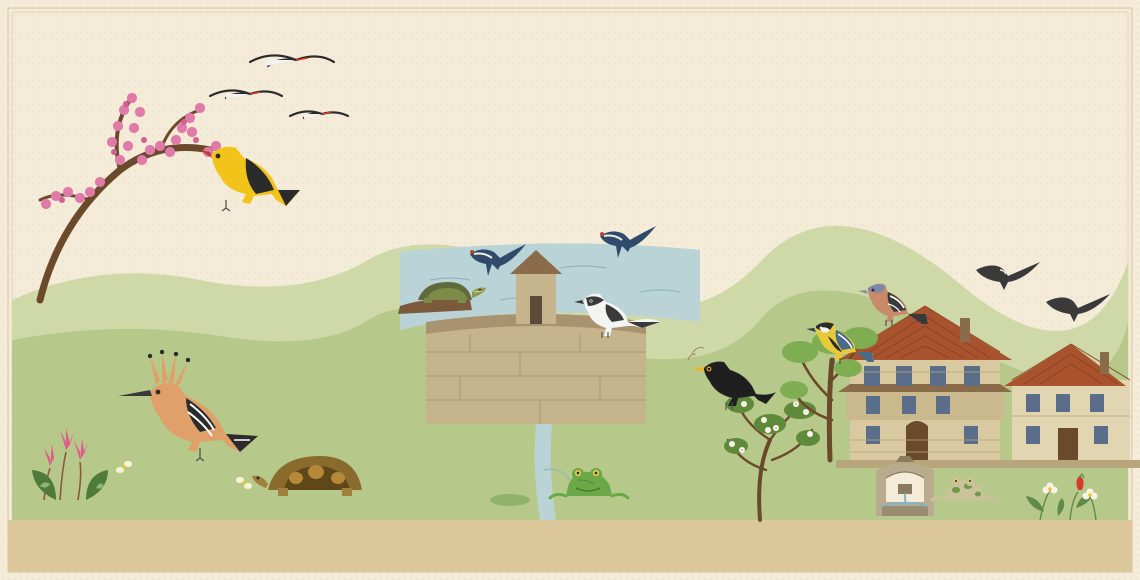
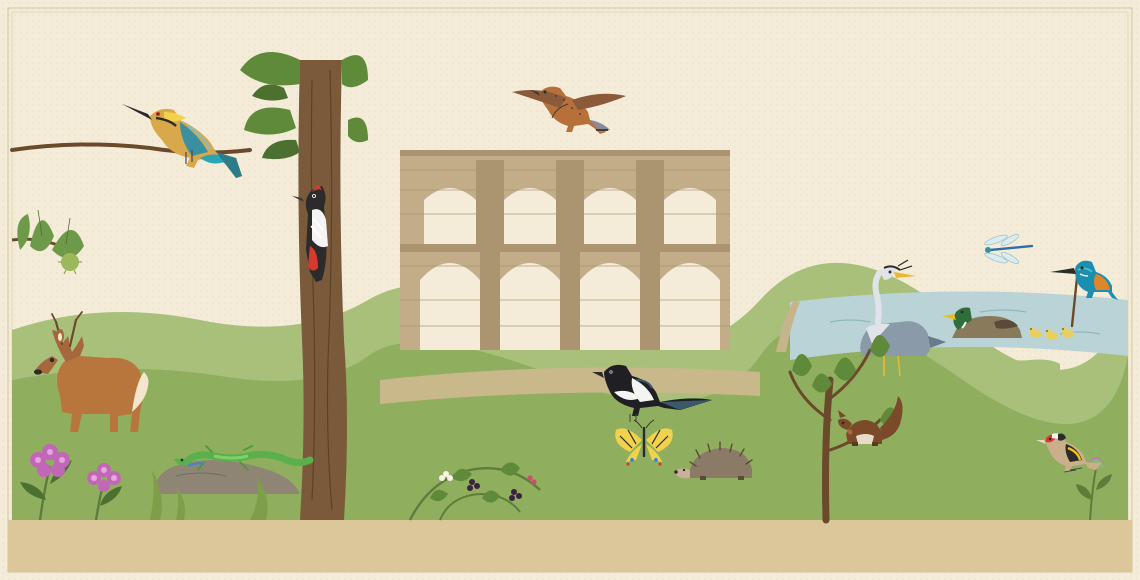
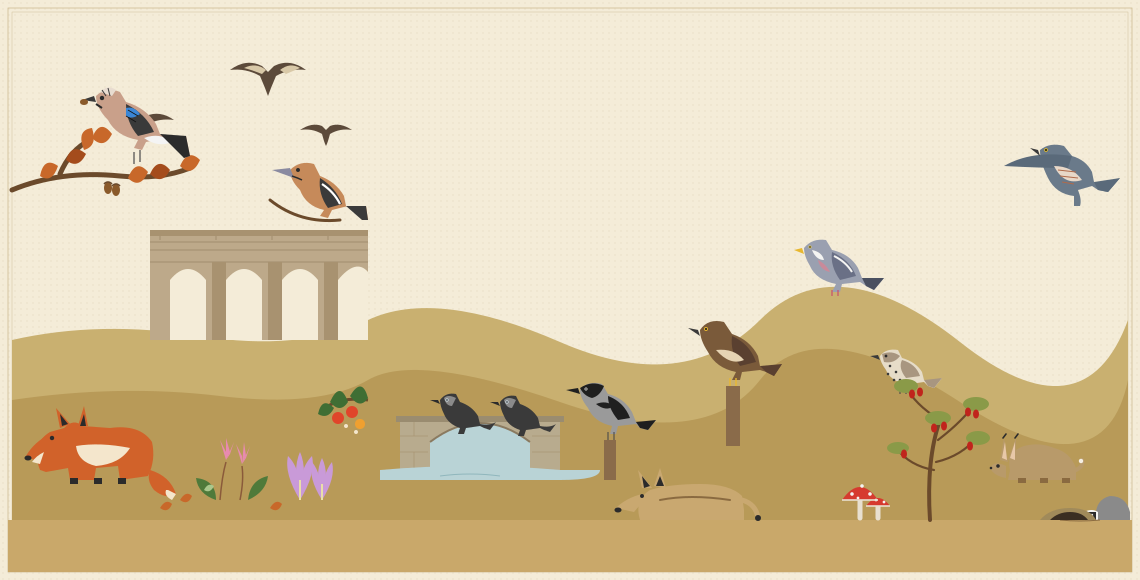
Kemerburgaz lies north of Istanbul, where the city meets the Belgrade Forest. Its wildlife shares four great habitats, and inside each of them are small but indispensable micro-habitats: a hollow, a muddy shore, the space beneath the eaves.
From the city to the dam: a schematic section through KemerburgazSection · scroll sideways
Four habitats
Every record in the notebook belongs to one of the four habitats below. Each card says what the habitat holds, which creatures live there, and what it needs in order to survive.
Forest
40 records in the notebook
The edge of the Belgrade Forest and the Northern Forests: a wide broadleaf woodland of oak, beech, chestnut and hornbeam.
To survive it needs: old and dead trees, unbroken forest cover, and damp north-facing slopes.
Micro-habitats: Old tree with hollows · Dead wood and stumps · Leaf litter · Forest edge and clearing
Whether a species can live here often depends on a single detail: the scar where a branch rotted away, a shore that stays wet into late summer, a gap under a roof tile. The drawings below show these small worlds, which do not appear on the plates. Scroll the cards sideways.
Forest
Old tree with hollows
The hollows that open where branches rot away and in old woodpecker holes are the forest’s ready-made rooms. Tawny owls, nuthatches and tits nest in them, and the squirrel stores its winter food there.
As a fallen trunk slowly rots it becomes a table for fungi, for insects and for the birds that hunt them. The inside of the stump softens a little more each year and holds more life.
In this narrow belt where forest meets meadow, cover and food lie side by side. That is why the forest edge is busier than either the wood itself or the open meadow.
The belt of reed and rush along the shore is the curtain between water and land. The coot builds its floating nest here, and tadpoles and dragonfly larvae grow up in this sheltered water.
The muddy shore uncovered when the water drops at the end of summer becomes a hunting ground for a few weeks. The grey heron waits at the edge while the wagtail runs over the mud picking up insects.
An earth bank dropping straight into the water is in demand because it is easy to dig. The kingfisher drives its tunnel here, and fox and badger dig their dens into the same slope.
The sun-warmed stones of the Ottoman dams work like a small rocky shore. Balkan terrapins bask here and the white wagtail nests in the joints between the blocks.
The space under old roofs and between the tiles is the village’s bird quarter. The swallow sticks its mud cup to the eaves, the swift slips under a tile, and the sparrow makes use of every gap in between.
Mortarless walls and aqueducts hold the day’s heat and do not give it up until nightfall. Green lizards bask on the stone, while jackdaws and kestrels nest in the cavities.
The trough of the village fountain is one of the few places with water all summer. Birds drink and bathe here, the swallow gathers mud for its nest, and the green toad spends the day underneath it.
A garden kept free of chemicals never runs short of fallen fruit, worms and insects. The hedgehog works it at night, the blackbird turns over the soil, and tits comb the trees.
A thorny hedge of hawthorn, bramble and cornelian cherry does two jobs at once: in summer it shields nests from cats and jays, and in winter it is a larder of fruit.
A meadow left to grow long fills with butterflies, grasshoppers and countless other insects, and their hunters follow. The kestrel hangs above it and the hoopoe walks among the stems.
A soft, south-facing earth bank is easy to dig and warms through the whole day. The bee-eater colony drives its tunnels into it, and lizard and tortoise bury their eggs in the same warm soil.
The columns of warm air rising from sunlit slopes are the invisible staircases of the sky. Storks and buzzards climb them without a wingbeat, then glide on to the next one.